
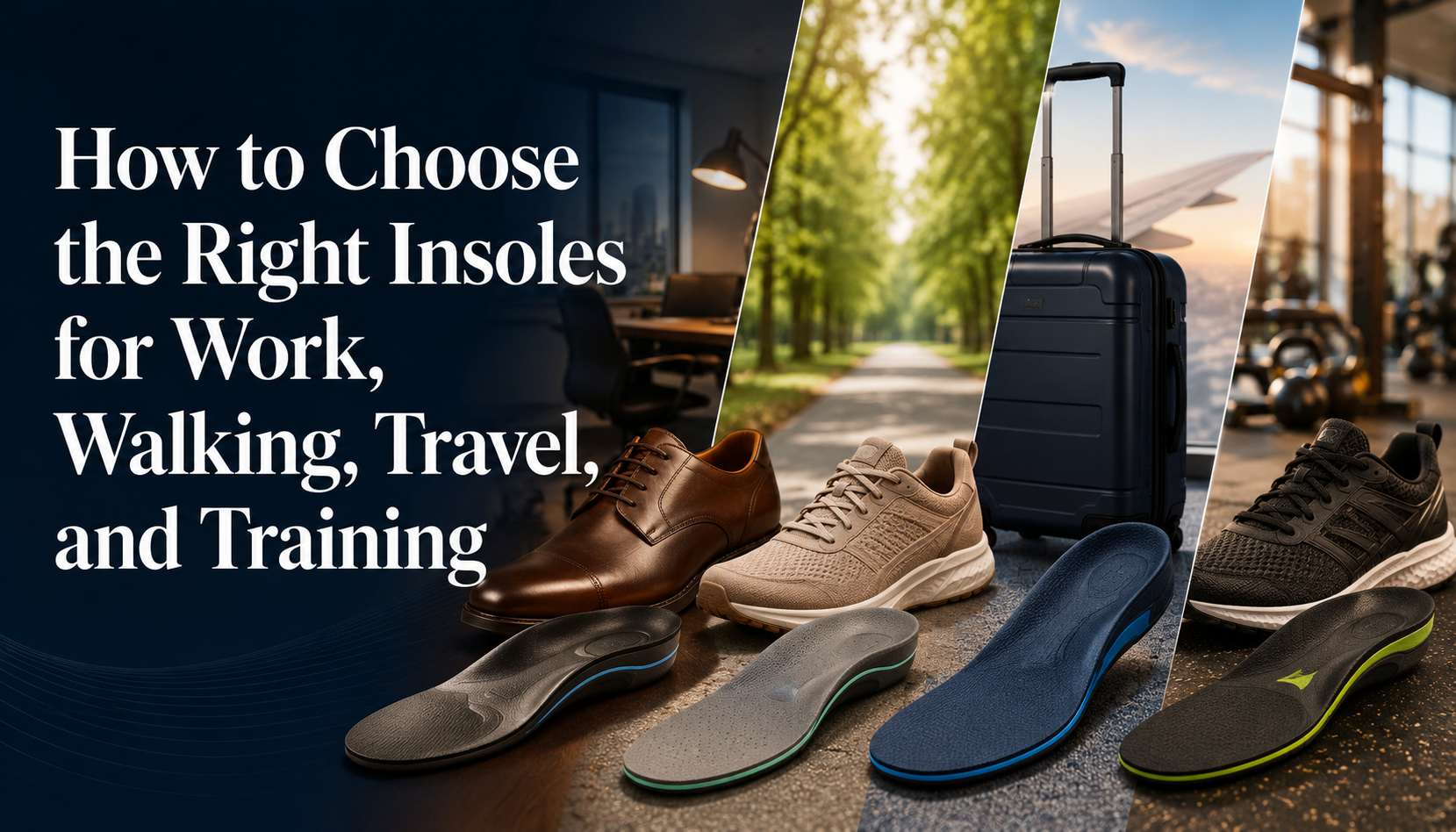
Insoles are often treated as universal accessories, but different routines create different demands. A person standing behind a counter for eight hours does not necessarily need the same construction as a traveler, daily walker, warehouse employee, or recreational athlete.
The correct choice depends on the shoe, available space, movement pattern, duration of use, surface conditions, and the wearer’s comfort preferences. An effective insole must fit the activity and the footwear at the same time.
Memory foam and polyurethane memory foam insoles can serve many everyday applications when their thickness, firmness, shape, and recovery are properly matched. The following guidance helps users and product buyers distinguish between common use cases.
Insoles for Long Work Shifts
Work environments can involve hard floors, repeated short walks, prolonged standing, lifting, or a combination of these activities. Factory shoe inserts may feel adequate initially but become less comfortable as the day continues.
A work-oriented insole should provide dependable cushioning without making the shoe unstable. Consistent performance across several hours is more important than an extremely soft first impression.
Useful characteristics include:
- Controlled heel cushioning
- Stable forefoot contact
- Reliable compression recovery
- Secure placement inside the shoe
- A surface suitable for extended wear
- Thickness compatible with work footwear
- Durable layer bonding
- Easy removal for ventilation
Safety footwear requires special attention. Replacement insoles should not interfere with fit, protective toe space, electrical properties, or other certified features.
Insoles for Everyday Walking and Commuting
Daily walking creates repeated loading across pavements, station floors, stairs, and indoor surfaces. Commuters may also stand for long periods while waiting or using public transportation.
Walking insoles should support smooth movement and remain securely positioned. A bulky insert that lifts the heel or compresses the toes can create more problems than it solves. Balanced cushioning should improve the walking experience while preserving the shoe’s natural fit.
Priorities for walking and commuting include:
- Full-length comfort
- Moderate, controlled thickness
- Adaptation beneath the heel and forefoot
- Low movement inside the shoe
- Compatibility with repeated bending
- Practical weight
- Breathable surface construction
- Recovery between wear periods
Users should test insoles on shorter walks before relying on them for a full day. This allows time to identify pressure or fit issues.
Insoles for Travel
Travel combines several conditions: long periods of sitting, walking through terminals, carrying luggage, waiting in queues, and exploring unfamiliar streets. Footwear may remain on for many hours with limited opportunities for ventilation.
Travel insoles should therefore provide practical cushioning without adding unnecessary weight or complexity. A familiar, tested insole is preferable to a new product introduced on the day of departure.
Travel-focused considerations include:
- Comfort during extended wear
- Compatibility with the primary travel shoe
- Easy removal for drying
- Stable fit during varied walking speeds
- Moderate weight
- Sufficient toe space
- Durable construction
- Suitability for changing daily routines
Carrying a second pair of shoes can also be beneficial. Rotating footwear changes pressure patterns and allows each pair to air between uses.
Insoles for Training and Active Routines
Training creates faster and more forceful movements than ordinary walking. The insole must work with the shoe’s own cushioning, heel structure, flexibility, and intended sport.
Memory foam can improve comfort in some training contexts, but excessive softness may reduce the connected feeling required for quick changes of direction. Activity-specific performance should take priority over softness when movements become more demanding.
Evaluate the following for active footwear:
- Type of training
- Directional movement
- Impact level
- Shoe volume
- Heel security
- Forefoot flexibility
- Insole weight
- Moisture exposure
- Recovery after repeated loading
- Compatibility with the shoe’s original design
For highly specialized sports, a purpose-built insole may be more suitable than a general comfort insert.
Insoles for Casual and Lifestyle Shoes
Casual shoes vary widely, from spacious sneakers to narrow slip-ons and low-volume fashion footwear. The available internal space often determines whether an insole can be added successfully.
A thin or medium-profile PU memory foam insole may improve the interior of compatible casual shoes. The product should provide noticeable comfort without changing how the shoe holds the heel or toes.
Suitable casual applications may include:
- Everyday sneakers
- Walking-oriented lifestyle shoes
- Roomy boots
- Commuting footwear
- Travel shoes
- Selected slip-on designs
- Shoes with removable factory inserts
Formal and narrow shoes often require thinner constructions. Forcing a thick insole into limited space can create pressure across the top of the foot.
Matching Insole Firmness to the User
Softness is a personal preference, but activity and body weight also influence how foam feels. A very soft product may compress deeply under a heavier load, while a light user may experience the same foam as adequately supportive.
Medium-firm memory foam often provides a practical balance for broad everyday use. The objective is controlled cushioning, not the deepest possible compression.
Firmness decisions should consider:
- User body weight
- Duration of wear
- Standing versus walking
- Shoe structure
- Desired cushioning sensation
- Foam thickness
- Recovery characteristics
- Previous insole preferences
Users should allow a brief adaptation period, but ongoing numbness, rubbing, instability, or pain should not be ignored.
Correct Fit Inside the Shoe
Fit is the first requirement for any insole. The insert should lie flat, remain centered, and follow the internal outline without curling. The shoe should still provide enough space around the toes and heel.
When possible, the original removable insert should be taken out before installing a full-length replacement. Adding a thick insole on top of an existing one can alter footwear geometry and restrict the foot.
A fitting checklist includes:
- Confirm the correct size
- Remove the factory insert when appropriate
- Trim gradually when required
- Align the heel section first
- Check for folded edges
- Confirm toe space
- Check heel security
- Walk indoors
- Test both shoes
- Reassess after several minutes
The user should not continue wearing an insole that causes pressure simply because the material is expected to “break in.”
Insole Care for Different Activities
Work, travel, and training can expose insoles to heat and moisture. Regular ventilation is therefore important. Removing the inserts after use helps the shoe interior dry and gives the foam an opportunity to recover.
Cleaning methods should follow the manufacturer’s directions. Gentle care protects the foam structure and reduces the risk of surface separation or deformation.
Recommended habits include:
- Air insoles after long wear
- Alternate between shoes when possible
- Wipe surfaces rather than saturating them
- Dry naturally
- Keep them away from strong direct heat
- Inspect bonding and edges
- Replace permanently compressed products
- Clean the shoe interior as well
Odor, visible damage, shifting, and lost cushioning are signs that care or replacement may be necessary.
When Standard Insoles May Not Be Enough
Comfort insoles can improve the internal feel of footwear, but they do not resolve every foot or shoe problem. Incorrect sizing, structural shoe damage, severe wear, or persistent symptoms require a different solution.
People experiencing continuing pain, loss of sensation, swelling, skin damage, or significant gait concerns should seek professional assessment. Standard memory foam insoles should not be presented as substitutes for clinically prescribed devices.
Situations requiring additional attention include:
- Persistent or worsening pain
- Numbness or tingling
- Recurrent blisters
- Significant left-to-right differences
- Recent injury
- Diabetes-related foot concerns
- Severe shoe deformation
- Prescribed orthotic requirements
The safest decision is based on the user’s condition, footwear, and qualified professional guidance where needed.
A Practical Selection Method
Rather than buying solely according to packaging claims, users should begin with the activity and shoe. They can then compare thickness, firmness, material, recovery, and construction quality.
FIXAR’s polyurethane memory foam insoles are positioned for daily movement, walking, work routines, and other comfort-focused applications. Their PU material approach emphasizes adaptive cushioning, recovery, and repeatable footwear performance.
A final selection process can follow these steps:
- Define the primary activity
- Check whether the shoe has removable insoles
- Measure available internal space
- Choose an appropriate thickness
- Select a controlled firmness
- Review material and recovery quality
- Confirm sizing or trimming method
- Test the fit indoors
- Increase wear duration gradually
- Monitor comfort and material condition
An insole should feel like a natural part of the shoe. When it dominates the fit or creates new pressure, the specification is not appropriate.
Sık Sorulan Sorular – S.S.S
1. Are all insoles suitable for every activity?
No, because work, walking, travel, and training place different demands on footwear. Material, thickness, shape, and firmness should match the main use.
2. What type of insole is suitable for standing at work?
A work insole should provide controlled cushioning, stable contact, and dependable recovery. It must also fit without reducing essential toe or heel space.
3. Are memory foam insoles good for walking?
They can improve everyday walking comfort when the foam is stable and the shoe has adequate room. The insert should remain flat and secure during movement.
4. Can I use the same insoles for work and training?
Possibly, but the activities may require different performance characteristics. Training footwear often benefits from lighter and more movement-specific designs.
5. What makes an insole suitable for travel?
Travel insoles should remain comfortable during long wear, varied walking, and waiting periods. They should also be tested before the journey.
6. Should work-shoe insoles be firm or soft?
A balanced or medium firmness often provides more controlled long-duration comfort than extremely soft foam. Personal preference, weight, and footwear structure still matter.
7. Can thick insoles be used in every shoe?
No, because thick inserts reduce internal volume and raise the foot. Narrow or low-profile shoes may require thinner products.
8. Are memory foam insoles appropriate for running?
General memory foam inserts may not meet the movement and stability requirements of every runner. Running shoes and individual biomechanics should guide the choice.
9. Can insoles improve old footwear?
They may restore some interior cushioning when the shoe remains structurally sound. They cannot repair worn outsoles, damaged uppers, or collapsed support structures.
10. How do I know whether the insole fits correctly?
The insert should lie flat, remain centered, and preserve comfortable toe and heel space. There should be no folding, sliding, or concentrated pressure.
11. Should I remove the original shoe insert?
Removal is usually recommended for full-length replacements when the original insert is detachable. This helps avoid excessive thickness.
12. Can I stack two pairs of insoles?
Stacking thick inserts is generally unsuitable because it changes fit and reduces space. A single correctly specified product is normally preferable.
13. How long should I test new insoles indoors?
They should be tested long enough to walk, stand, and evaluate pressure in both shoes. Wear duration can then be increased gradually when the fit remains comfortable.
14. What should I do when an insole slides forward?
Check sizing, heel alignment, and whether the shoe interior is suitable. An insert that continues to move should be adjusted or replaced.
15. How often should work insoles be replaced?
Replacement timing depends on usage intensity and material quality. Permanent compression, surface damage, movement, or declining comfort indicate that replacement may be needed.
16. Can insoles reduce tiredness after walking?
Additional cushioning may make walking feel more comfortable and reduce the harshness of firm surfaces. Results vary, and persistent fatigue may have several causes.
17. Are polyurethane insoles suitable for daily use?
PU memory foam insoles can be designed for regular wear and repeatable cushioning. Their suitability depends on formulation, construction, and shoe compatibility.
18. How should travel insoles be packed?
They can remain inside the travel shoes or be carried flat in a clean, dry place. They should not be tightly folded or compressed for long periods.
19. When should I consult a healthcare professional?
Professional advice is appropriate for persistent pain, numbness, swelling, injury, recurring skin problems, or medical conditions affecting the feet. Standard comfort insoles should not delay necessary assessment.
20. How can I choose between several FIXAR insoles?
Compare the intended activity, shoe space, thickness, cushioning level, and product construction. The best option is the one that improves comfort while preserving a secure footwear fit.
Bir yanıt yazın